Pain can make you feel as though something in your body is permanently damaged. You may begin avoiding certain movements, limiting your activities, or worrying that using the painful area will make things worse.
Although pain should always be taken seriously, it does not necessarily mean that your body is damaged beyond repair. Your brain and nervous system possess an amazing capacity to learn, adapt, and change. This ability is known as neuroplasticity.
Understanding neuroplasticity can change the way we approach pain, movement, and chiropractic care—and offer hope to people who have been struggling with persistent discomfort.
What Is Neuroplasticity?
Neuroplasticity is the brain and nervous system’s ability to reorganize themselves by forming and strengthening neural connections.
Your nervous system changes in response to what you repeatedly think, feel, and do. Neuroplasticity allows you to learn a new skill, improve your balance, develop a healthier habit, or recover function after an injury.
Imagine walking through a field of tall grass. The first time you cross the field, creating a path takes effort. If you walk the same route every day, the grass becomes flattened and the path becomes easier to follow.
Your nervous system works in a similar way. Frequently repeated patterns become more familiar and automatic.
This is helpful when you are learning to ride a bicycle, play an instrument, or perform an exercise. However, the nervous system can also become very efficient at patterns such as muscle guarding, altered movement, fear of activity, or constantly scanning the body for pain.
The encouraging news is that an established pathway is not necessarily a permanent one. With safe experiences and consistent repetition, the nervous system can begin creating a new path.
Pain Is Real, but It Is Not Always a Damage Meter
Pain is real. It is not imaginary, and it should never be dismissed.
However, pain is more complex than a simple measurement of tissue damage. Pain is a protective response produced when the brain determines that the body may be in danger.
The nervous system makes that decision using information from many sources, including:
-
The muscles, joints, and other tissues
-
Previous injuries and experiences
-
Sleep quality
-
Stress levels
-
Inflammation and illness
-
Thoughts, emotions, and expectations
-
The environment around you
Think of pain as an alarm system.
When you touch a hot surface, the alarm serves an important purpose. It gets your attention and prompts you to move your hand. Similarly, pain following an injury can protect an area while healing takes place.
Sometimes, however, the alarm system becomes overly sensitive. It may continue to sound even after the original injury has healed.
It is similar to a smoke detector that sounds when a piece of toast is slightly overdone. The alarm is real, but its sensitivity may no longer match the actual level of danger.
When pain persists, the body may begin guarding the area. Muscles tighten, normal movements feel threatening, and the person understandably starts moving less. Over time, reduced movement can contribute to stiffness, weakness, decreased confidence, and even greater sensitivity.
This can create a cycle:
Pain leads to fear of movement. Fear leads to less movement. Less movement leads to stiffness and weakness. Those changes can make movement feel even more threatening.
This does not mean that all persistent pain is caused by a sensitive nervous system. Pain can be associated with an injury, inflammation, illness, or another condition requiring appropriate evaluation. New, severe, or unexplained symptoms should always be assessed by a qualified healthcare professional.
It does mean that the intensity of pain does not always correspond directly to the amount of tissue damage—especially when pain has lasted for months or years.
Movement Is Information for the Brain
Movement does much more than burn calories or strengthen muscles. Movement provides important information to the brain.
Your muscles, joints, tendons, skin, eyes, inner ears, and the bottoms of your feet continually send sensory information to your nervous system. Your brain uses this information to understand where your body is, how it is moving, and what it should do next.
Every time you walk, reach, turn your head, balance on one foot, or stand up from a chair, you are creating communication between your body and brain.
This is one reason movement can be considered medicine. Like any other medicine, however, the dose matters.
Too little movement may not provide enough stimulation for the body to adapt. Too much movement too quickly may increase symptoms and reinforce the nervous system’s perception of danger.
The goal is to find an appropriate amount of movement that feels safe enough to repeat consistently.
For one person, that may be a ten-minute walk. For another, it may begin with gentle shoulder circles, slowly turning the head, or standing from a chair several times. Someone recovering from an injury may need to practice a small portion of a movement before gradually increasing the range, resistance, speed, or duration.
Progress does not require forcing your body through severe pain. It involves giving your nervous system successful, repeatable experiences.
How Chiropractic Care Fits Into the Picture
Chiropractic care is often associated with neck and back pain, but chiropractic principles also recognize the important relationship between joint movement and nervous-system function.
Joints are not simply hinges. Sensory receptors in and around the joints continually send information to the brain about motion, position, pressure, and tension.
When an area is stiff, guarded, painful, or not moving well, the quality and variety of that sensory information may change.
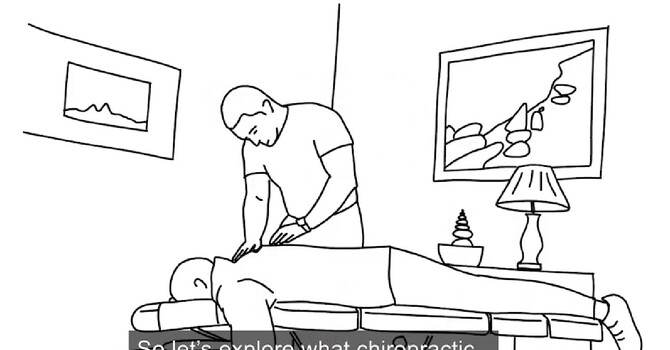
A chiropractic adjustment applies a specific mechanical input to a joint. For an appropriately selected patient, chiropractic care may help improve mobility, reduce discomfort, and create new sensory input for the nervous system.
I like to think of an adjustment as creating a window of opportunity.
If a person feels less guarded or can move more comfortably after an adjustment, that can be an ideal time to reinforce the improvement with movement. Walking, mobility exercises, balance activities, or corrective exercises allow the nervous system to practice using that motion.
Chiropractic care and active movement do not need to compete with one another. They can work together.
Hands-on care may help reduce barriers to movement, while active care helps a person develop strength, coordination, confidence, and resilience.
Repetition Helps Create New Pathways
Neuroplastic change rarely comes from one perfect workout, one chiropractic adjustment, or one day of sitting with ideal posture. The nervous system learns through repetition.
Fortunately, repetition does not have to be complicated.
You might begin by:
-
Taking a short walk each day
-
Standing and moving after long periods of sitting
-
Practicing a few gentle mobility exercises
-
Gradually adding appropriate strength training
-
Working on balance near a stable surface
-
Taking slow breaths when movement feels threatening
-
Returning gradually to an activity you enjoy
Pay attention not only to discomfort, but also to what feels smooth, stable, strong, or easier than it did before. These positive experiences provide valuable information to your nervous system.
A helpful phrase to remember is: Notice. Breathe. Move. Repeat.
Notice what you are feeling without immediately judging it. Take a slow breath. Choose a manageable movement. Then repeat that successful experience over time.
Your Body Is Designed to Adapt
Your body is not simply a machine that wears out with every movement. It is living tissue with the ability to respond to appropriate challenges.
Muscles can become stronger. Bones can adapt. Balance can improve. Movement patterns can be refined. Confidence can return. The brain can learn new ways of interpreting and responding to information from the body.
Neuroplasticity reminds us that our current patterns do not have to become our permanent patterns.
Kelly Anello
Contact Me